
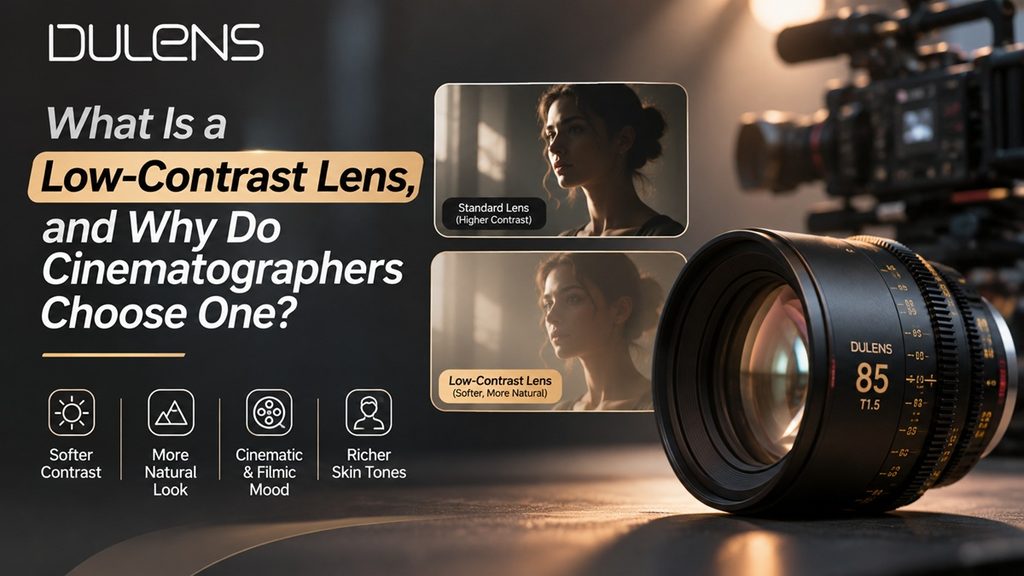
A low-contrast cine lens produces a more lifelike appearance. It provides a seamless transition between dark shadows, mid-tones, and light highlights. This makes the image look softer and still maintains important details.
Unlike modern lenses that aim for high contrast and a clean look, low-contrast lenses add a bit more character. The lens coatings and optical design impact the way light goes through the glass. This can result in soft flares, lighter blacks, and soft lighting around brighter areas.
But low contrast does not mean poor sharpness. A lens can provide a soft appearance while retaining fine detail. This mix of detail and smooth tones makes a low-contrast full-frame cine lens a good choice for digital filmmaking.
A low-contrast full-frame cine lens brings this look to cameras with full-frame sensors. It provides filmmakers with more flexibility for creating soft film-like images without the need for vintage lenses.
How Does a Low-Contrast Lens Create Its Image Character?
The overall performance of a low-contrast cine lens depends on the interaction of its optical elements. Lens coatings, glass elements, internal reflections, and aperture settings all play a role. Knowing how these features work can help filmmakers choose the right low-contrast full-frame cine lens for their shots.
1. Special Optical Coatings
Lens coatings control how light passes through different glass elements. Standard coatings often reduce unwanted reflections and improve overall contrast. Some vintage-style coatings allow controlled reflections to create distinctive effects.
These effects can produce softer blacks and more noticeable flare. They can also create a gentle glow around bright sources. The result depends on the coating and surrounding lighting conditions.
2. Softer Highlight Transitions
When the difference between the light and dark in an image is extreme, the bright lights may appear harsh. Low contrast lenses will soften this effect by providing a more gradual transition between light and dark.
This effect might be visible around windows, lamps, and backlit subjects. It adds softness to an image and can help create depth. Another technique for achieving this effect involves using a light scrim or cut-out for specific shots.
3. Gentle Halation and Flare
Halation appears as a soft glow around bright objects. Flare occurs when unwanted light enters and reflects inside the lens. Both effects can add visual character to cinematic images.
Some lenses produce these effects more strongly at wider apertures. Cinematographers can adjust their aperture to control the final appearance. This gives them greater creative control during production.
Why Do Cinematographers Choose Low-Contrast Full-Frame Cine Lenses?
Choosing a lens involves more than checking sharpness and focal length. Cinematographers also consider the mood and feeling of each scene. A low-contrast full-frame cine lens offers several creative advantages for different productions.
1. To Create a Natural Skin Appearance
Highly sharp images can sometimes make skin textures appear overly prominent. This may not suit every portrait, beauty film, or commercial. Low-contrast optics can create a gentler rendering of faces.
The goal is not to hide natural skin details completely. Instead, filmmakers can achieve softer tonal transitions and pleasing highlights. This helps maintain a natural appearance during close-up shots.
2. To Achieve a Vintage Cinematic Look
Many filmmakers want the character of older cinema lenses. However, finding suitable vintage glass can involve practical challenges. Older lenses may have inconsistent performance and limited mechanical support.
Modern vintage-inspired optics offer another way to achieve this look. A low-contrast full-frame cine lens can combine selected optical characteristics with modern cinema-friendly construction. This makes them useful for planned commercial and narrative productions.
3. To Add Character to Digital Footage
Modern digital cameras capture detailed images with impressive clarity. However, some projects need a less clinical visual appearance. A low-contrast cine lens can help create that character.
Its optical response adds texture before the footage reaches post-production. This gives colorists a useful starting point during image grading. It also helps establish a consistent visual direction.
4. To Create More Expressive Lighting Effects
Lighting plays an important role in the final cinematic image. A low-contrast lens can change how bright sources appear. It may create a soft glow, colorful flare, and gentle highlights.
These effects work great in music videos and creative advertisements, as well as in scenes that have a lot of backlighting. They can also infuse emotion and give a shot a cinematic feel. Still, proper exposure is important to keep key details clear.
5. To Maintain Detail While Softening the Overall Look
A common misconception is that low contrast means poor sharpness. These two image qualities describe different aspects of lens performance. Sharpness concerns detail, while contrast concerns tonal separation.
A well-designed lens can offer both qualities together. This allows filmmakers to retain subject definition and visual texture. It avoids making the entire image appear excessively soft.
Low-Contrast Lenses vs. Standard Cinema Lenses
Both types of lenses are crucial in the world of professional filmmaking. The selection should be based on the visual objectives of the production. The following table explains their common differences.
| Image characteristic | Low-contrast cine lens | Standard high-contrast cine lens |
| Shadow appearance | Softer and less deep | Deeper and more defined |
| Highlight response | May create gentle glow | Usually cleaner and controlled |
| Flare | Often more expressive | Usually more restricted |
| Skin rendering | Can appear softer | Often appears more defined |
| Overall character | Vintage-inspired and expressive | Clean and neutral |
| Creative application | Narrative and artistic projects | Commercial and technical projects |
What Should You Consider Before Buying a Low-Contrast Cine Lens?
Selecting a low-contrast cine lens isn’t simply an issue of appearance. Also, you must determine if it’ll work with your camera and shooting style. Here are a few key things to consider.
Full-Frame Sensor Coverage
Check if the lens covers your camera’s sensor size. The low-contrast full-frame cine lens should be able to fill the entire frame without dark corners. Also, see how it performs in the camera’s selected recording mode.
Aperture and Light Control
Make sure to look at the maximum aperture and the full aperture range of the lens.. A wide aperture can result in more flare and more lighting, but a narrow aperture can give you more control over the image.
Consistent Image Quality Across Focal Lengths
Lenses in the same set should produce similar images. Check their color, contrast, sharpness, and flare. This helps keep shots consistent and makes color grading easier.
Camera Compatibility and Build Quality
Make sure the lens mount fits your camera. Also, check its weight, focus gears, and front diameter. These details are important when working with a follow focus system, matte boxes, and gimbals.
How to Test a Low-Contrast Full-Frame Cine Lens
A lens test is the best way to see how it performs in real shooting conditions. Don’t rely only on product details or sample videos. Test it with your own camera and lighting setup.
Here are a few things to check before buying:
- Test skin tones: Take close-up photos in both natural and studio lighting.
- Preview bright lights: Preview lens performance on bright lights (in and out of frame).
- Experiment with aperture: See if there are changes in flare, sharpness, and glow.
- Verify corners of the frame: Ensure that the ends of the frame do not show any dark corners.
- Compare colors: Shoot with different focal lengths and check for color shifts.
Watch the footage on a good reference monitor. Keep exposure and colour settings the same while comparing clips. This will help you find a lens that fits your shooting style and production needs.
Conclusion
A low-contrast lens offers more than just a vintage look. It gives filmmakers another way to shape the image. Soft highlights, gentle shadows, and natural flare can add more mood and depth to a scene.
However, the right lens is based on the purpose of shooting. Before purchasing, verify the coverage of the sensors, as well as image quality, aperture, and construction. Before buying an entire set, always try the lens with your camera.
Looking for a low-contrast full-frame cine lens for your next project? Explore Dulens Optical’s APO Mini. Prime range. Locate a lens that combines vintage flair with contemporary functionality. Contact Dulens Optical to find the right lens for your filmmaking needs.
FAQs
Do low-contrast lenses make footage blurry?
No. Low contrast does not mean poor sharpness. A good lens can keep fine details clear while giving the image a softer look.
Are low-contrast lenses suitable for digital cameras?
Yes. Many low-contrast cine lenses work well with digital cinema cameras. Just check the sensor coverage and lens mount before buying.
What is halation in cinematography?
Halation is a soft glow around bright lights or objects. It gives highlights a gentle, glowing look.
Can a low-contrast lens create a vintage look?
Yes. Some low-contrast lenses create a vintage-style look with softer tones, gentle glow, and visible lens flare.