
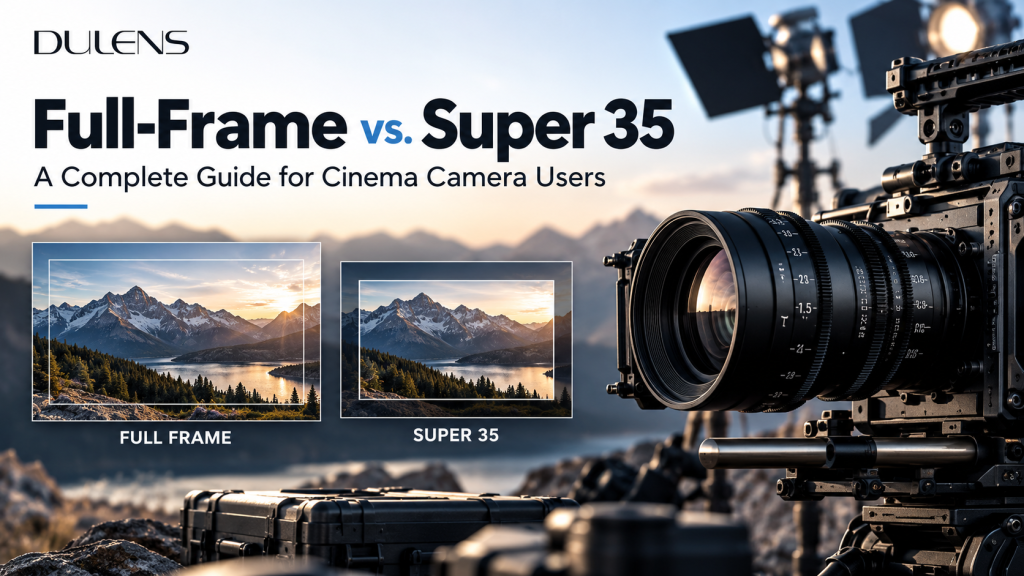
Your camera body is rarely the hardest choice on a film set. The sensor format can affect much more than most crews expect. Pick the wrong one, and a shot may not fit your story. You may get soft edges, odd framing, or a look that feels too flat.
Full-frame and Super 35 sensors handle light and depth of field in different ways. They also need different lens coverage. This can affect the whole shoot. A cinematographer who knows both formats can save time, cut costs, and avoid reshoots.
This guide explains the key differences between full-frame and Super 35 in simple terms. You will learn where full-frame cine lens coverage matters most. You will also see when an APO cine prime full-frame lens may be worth the cost. Plus, you will learn how a low-contrast full-frame cine lens can shape your final image.
What Full-Frame and Super 35 Actually Mean
These terms describe sensor size, not picture quality. The size gap is quite large. A full-frame sensor is about 36mm by 24mm. It is based on the 35mm still photo frame. Super 35 sensors are smaller, at around 25mm by 14mm. They come from motion picture film.
This size gap changes how a lens sends light to the sensor. A Super 35 lens may not cover a full-frame sensor. If it does not, you may see dark edges or corners. This is why full-frame cine lens coverage matters on set. Using the wrong lens can spoil an otherwise good shot.
Today, many camera makers offer both formats. The Sony Venice, Arri Alexa 35, and several Red models support these sensor options. Some cameras also let you switch sensor modes. This gives crews more freedom, but it also makes lens choice more important.
Field of View and Depth of Field on Set
Put the same lens on both sensor types, and the shot will look different. A full-frame sensor uses more of the lens image circle. This gives you a wider view. Super 35 uses less of that circle, so the view looks tighter.
The crop factor is around 1.5x in many cases. This changes how you plan your focal lengths. For example, a 35mm lens on Super 35 gives a view close to a 50mm lens on full frame. Crews that switch formats need to keep this in mind. Otherwise, it is easy to pick the wrong lens during a busy shoot.
Depth of field also changes. Full-frame can give you a shallower depth of field at the same aperture and framing. This can help separate a person from the background. Super 35 keeps more of the scene in focus. That can work well for documentaries and food shoots.
Neither format is better in every case. The best choice depends on your story, budget, and shooting needs.
Full-Frame Cine Lens Coverage Explained Simply
Lens coverage tells you how large an image circle a lens can project. A full-frame cinema lens often needs about 43mm to 46mm of image circle coverage. Without enough coverage, the lens may cause dark corners.
Older Super 35 primes often have smaller image circles. Many are close to 31mm across the diagonal. If you use one on a full-frame camera, check the lens specs first. A lens with poor coverage may create dark or soft corners. Color grading cannot fix this problem later.
A proper full-frame cine lens solves this issue at the lens level. The lens is made to cover the larger sensor from the start. This is even more useful with high-resolution cameras. Soft edges can stand out more when the image is viewed on a large screen.
Production teams should always check image circle specs before they lock a lens package. A quick check can help prevent an expensive reshoot.
Choosing an APO Cine Prime Full-Frame Lens
Chromatic aberration can appear as small color fringes around high-contrast edges. You may notice it more with bright backgrounds or wide-open apertures. In some shots, the effect is minor. In others, it can be distracting. Green screen and color-critical work can be more affected.
An APO cine prime full-frame lens is made to reduce this issue. APO means apochromatic. It refers to a lens design that improves color correction across several wavelengths. This helps keep different colors focused more closely on the sensor.
This can be useful on full-frame shoots. Full-frame lenses cover a wider image area, so optical flaws may be easier to see. An APO cine prime full-frame lens can help keep color edges clean. It can also reduce the amount of correction needed later.
Dulens Optical designs its APO Mini Prime series for full-frame use. The lenses feature full-frame coverage and remain lightweight. This makes them suitable for gimbal and handheld applications. The design aims to balance color correction with easy camera movement.
Lens Mount and Adapter Considerations
The lens mount affects how easily you can move lenses between camera bodies. PL mount is widely used for professional cinema lenses. EF mount is also common and works with many camera systems.
Adapters can help you use lenses across different mounts. But an adapter cannot fix poor lens coverage. If a Super 35 lens does not cover a full-frame sensor, an adapter will not make its image circle larger. Always check the lens coverage before using an adapter.
Dulens Optical offers interchangeable EF and PL-mount options for its APO Mini Prime line. This can help crews use the same lens set across different camera bodies. It may also reduce the need to buy or rent separate lens sets.
Why a Low-Contrast Full-Frame Cine Lens Changes Your Image
Not every project needs a very sharp, clean digital look. A low-contrast full-frame cine lens can give the image a softer feel. It can create a gentle flare and soften bright areas. It may also lift shadow detail in a subtle way.
This can make the image feel more natural and film-like. The effect comes from the lens design and its optical coatings. It is not the same as simply placing a filter in front of the lens.
Skin tones can also look softer and more natural. Highlights may roll off in a gentler way instead of looking too hard. This style can work well for narrative films, portraits, and other projects where a softer image is wanted.
A low-contrast full-frame cine lens can still keep a high level of detail. The softer look comes more from the way light and tone are handled. Dulens Optical uses this approach in its APO Mini Prime line. The lenses combine full-frame coverage with a look aimed at natural skin tones and soft halation.
Super 35 Strengths Worth Remembering
Full-frame gets a lot of attention today. Still, Super 35 has many useful strengths. Its smaller sensor can allow for lighter camera bodies and smaller lenses. That can help on gimbal, handheld, and drone shoots.
Super 35 lenses are also easy to find and often cost less. Many years of cinema work have been built around this format. Rental houses often have a wide range of Super 35 lenses. This can help budget-focused productions build a full lens set.
Super 35 can also keep more of the scene in focus at the same aperture. This is useful for documentary work and fast shoots. It can help when you have little time to set up focus. Many camera teams still keep a Super 35 lens kit for these reasons.
Resolution, Dynamic Range, and Low-Light Performance
Sensor size affects more than field of view. Light gathering also plays a part. A full-frame sensor has a larger surface area. Depending on the sensor design and pixel size, it may offer cleaner results in low light.
Dynamic range is a little more complex. The gap between full-frame and Super 35 has become smaller with newer camera sensors. Modern Super 35 cameras can deliver a very wide dynamic range. The camera model and sensor design matter more than sensor size alone.
Resolution is not just dependent on the size of the sensor. The higher-resolution Super 35 sensor can outperform an older full-frame sensor for detail. Before selecting a camera format, always test the native resolution, dynamic range and sensor design of the camera.
Full-Frame vs. Super 35: Quick Comparison
The table below shows the main differences crews may consider before choosing a format.
| Factor | Full-Frame | Super 35 |
| Sensor size | About 36mm x 24mm | About 25mm x 14mm |
| Field of view | Wider at the same focal length | Narrower, about 1.5x crop |
| Depth of field | Shallower, more subject separation | Deeper, more of scene in focus |
| Lens coverage needed | 43mm to 46mm image circle | About 31mm image circle |
| Lens options and pricing | Growing, often pricier | Extensive and budget friendly |
| Camera weight | Often bulkier bodies and glass | Lighter, better for gimbal work |
| Common use cases | Narrative features, immersive drama | Documentary, fast-paced shoots |
| Low-light performance | Often stronger on larger photosites | Improving fast on modern sensors |
Making the Right Call for Your Next Production
Start with the story, not the spec sheet. A period drama may benefit from a wide view and shallow depth of field. A fast documentary shoot may work better with the lighter Super 35 setup.
Budget matters too. Full-frame lenses need a larger image circle, which can raise their cost. That extra cost may affect rental and purchase prices. Weigh the creative gain against your budget before you choose.
If your project needs full-frame coverage, use lenses made for it. An APO cine prime full-frame lens can help control color fringing across the full image circle. A low-contrast full-frame cine lens can also add a softer look when a very sharp image is not the goal.
Some productions use both formats on the same project. A commercial may use full-frame for hero shots and Super 35 for fast pickup work. Planning the lens package early can help avoid last-minute rental issues.
Final Thoughts
Full-frame and Super 35 are both good options for shooting film for movies. It depends on your story, budget, and lens requirements. One format is not making the other “old hat. Both of them are still used in contemporary production.
If you are planning to use it in your next project, select a glass that has been designed to fit a full frame. Dulens Optical offers full-frame, APO Mini Prime lenses. The lenses feature apochromatic correction and also a low-contrast appearance that suits skin tones.
Talk to the Dulens Optical team before your next shoot. The right lens can help your full-frame camera deliver the look you want.
FAQs
What is the main difference between full frame and Super 35?
Full-frame sensors are about 36mm by 24mm. Super 35 sensors are smaller, at around 25mm by 14mm. This changes the field of view and depth of field.
Can I use Super 35 lenses on a full-frame camera?
Only when the lens image circle covers the full-frame sensor. Many Super 35 lenses may vignette on full-frame cameras. A crop mode can help in some cases.
Does full-frame always look more cinematic than Super 35?
No. Both formats can create high-quality cinema images. Full-frame can give a shallower depth of field, while Super 35 has long been widely used in film production.
What does APO mean in a cine lens?
APO means apochromatic. It refers to a lens design that helps reduce color fringing across several wavelengths. An APO cine prime full-frame lens can help keep color edges clean.
Why would a cinematographer choose a low-contrast lens on purpose?
A low-contrast full-frame cine lens can soften bright areas and give shadows a gentler look. This can suit films and portraits that need a more natural image.
Do I need different lenses for full-frame and Super 35 cameras?
Not always. If your lens covers the full-frame image circle, you can use it on both formats. A full-frame cine lens can also work in Super 35 mode.